


Design is not about what you add, but about what you remove.
Vitaly Friedman
APIs, or Application Programming Interfaces, are the invisible backbone of modern software development. They allow the applications and systems to discuss and share data efficiently.
Let’s consider an example
Imagine you’re at a restaurant:
•You (the client) place an order with the waiter.
•The waiter (the API) conveys your request to the chef (the server).
•The chef prepares the food (processes the request) and gives it to the waiter.
•The waiter delivers it back to your table (response).
Usage of APIs
•Reusability: Avoid reinventing the wheel by leveraging existing APIs (e.g., Google Maps API, Stripe Payments API).
•Efficiency: Save development time by integrating ready-made functionalities.
•Scalability: Enable modular, distributed systems that can grow easily.
•Integration: Connect multiple platforms web, mobile, IoT, or analytics.
•Automation: APIs allow machines to talk to machines without manual input.
Working of APIs
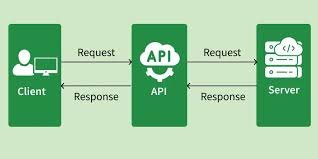
APIs operate through a request-response cycle between a client and a server
•Request: The client sends a request to an API endpoint (URI).
•Processing: The API forwards the request to the server.
•Response: The server processes and sends back the requested data.
•Delivery: The API returns the server’s response to the client.
This communication happens over the HTTP/HTTPS protocol, with additional security via headers, tokens, or cookies.
Types of API Architectures
API architectures define how systems communicate and exchange data, each offering different levels of flexibility, performance, and structure based on application needs.
1. REST (Representational State Transfer)
2. SOAP (Simple Object Access Protocol)
3. GraphQL
4. gRPC
Types of APIs
APIs are categorized based on their accessibility, usage, and purpose.
Web API
Local API
Program API
Internal API
Partner API
Open API
What are REST APIs?
REST stands for Representational State Transfer and follows the constraints of REST architecture, allowing interaction with RESTful web services. GET (retrieve a record)
• PUT (update a record)
• POST (create a record)
• DELETE (delete the record)
| Tool | Purpose |
| Postman | Manual and automated API testing |
| SoapUI | SOAP & REST API testing |
| JMeter | Load and performance testing |
| Apigee | Enterprise API management |
| vREST | Automated regression testing |
Advantages of APIs
•Efficiency: Enable faster development using reusable components.
•Integration: Seamlessly connect different systems and services.
•Automation: Reduce manual effort by automating workflows.
•Scalability: Simplify distributed and modular system design.
•Innovation: Unlock new functionalities and integrations.
Disadvantages of APIs
•High Cost: Developing and maintaining APIs requires expertise.
•Security Risks: Exposed endpoints can be vulnerable to attacks.
•Versioning Challenges: Managing updates without breaking compatibility.
•Dependency Risk: Relying on third-party APIs introduces failure points.
Reference:https://www.geeksforgeeks.org/software-testing/what-is-an-api/

